ADVERTISEMENT
Fast-food restaurants are designed for speed, convenience, and accessibility. They are places where people from all walks of life briefly intersect—students on lunch breaks, workers grabbing a quick meal, families on the go, and travelers passing through. Yet despite the simplicity of the experience, one small question continues to spark quiet debate: what should customers do with their table after they finish eating?
At first glance, it seems like a trivial issue. However, the way people behave in shared dining spaces reflects deeper attitudes about responsibility, community, and respect for others.
A Shared Space, Not a Private One
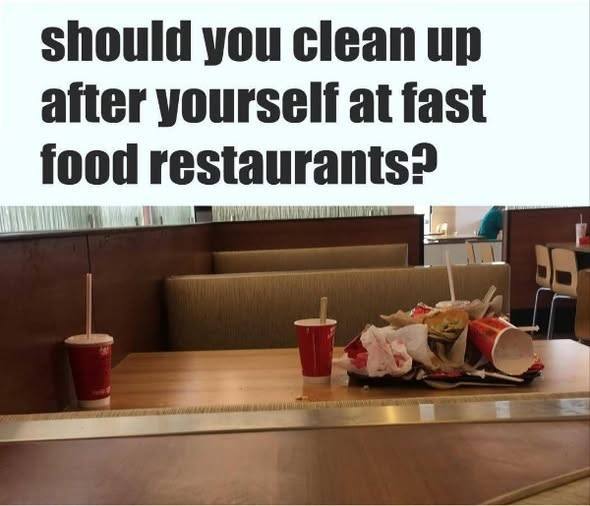
Unlike home dining, fast-food restaurants are public environments where many people use the same tables throughout the day. Because of this constant turnover, cleanliness becomes a shared concern. When a customer leaves behind trays, wrappers, spilled drinks, or scattered napkins, it doesn’t just affect the staff—it also impacts the next person looking for a place to sit.
ADVERTISEMENT
A clean table signals readiness, order, and consideration. A messy one can create hesitation, discomfort, or even frustration. In a busy lunch rush, these small details can influence the overall experience more than the food itself.
Why Many Customers Choose to Clean Up
For a large number of people, throwing away their trash and stacking their tray is simply a habit. It requires little effort but creates a meaningful difference. They view it as part of basic public etiquette—similar to holding a door open or not littering in a park.
There are practical benefits as well. When customers clean up after themselves:
- Staff can focus more on food preparation and service
- Tables become available faster for others
- The dining area stays more pleasant and organized
- The overall environment feels less chaotic
These small actions contribute to smoother operations without requiring formal rules.
The Other Perspective: “We Paid for Service”
See more on the next page to continue reading →
ADVERTISEMENT