The Other Perspective: “We Paid for Service”
ADVERTISEMENT
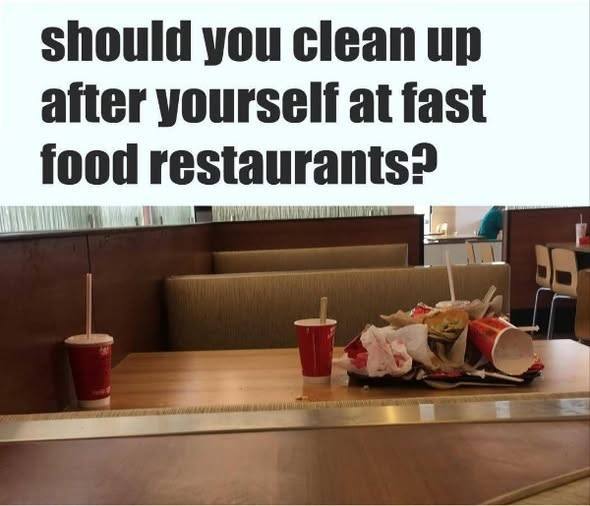
On the other side of the discussion, some people believe cleanup should not be the customer’s responsibility. Their argument is based on the idea that fast-food prices already include service costs, which should cover cleaning duties performed by staff.
From this perspective, asking customers to dispose of their own waste may feel like an extra expectation added to a paid service. Some also argue that large corporations should employ enough staff to handle all maintenance tasks without relying on customer participation.
The Reality in Modern Fast-Food Culture
In practice, most fast-food restaurants operate on a hybrid system. Customers are expected to dispose of their trash, while employees handle deeper cleaning, sanitization, and maintenance. This model exists because it balances efficiency with practicality.
ADVERTISEMENT
It is unrealistic to expect staff to immediately reset every table during peak hours, just as it is unrealistic to expect customers to fully clean surfaces. Instead, the system depends on a shared understanding: everyone contributes a small part to keep the space functional.
Why Small Actions Have a Bigger Impact Than They Seem
The condition of a dining area is shaped by accumulation. One messy table may not seem significant, but dozens of them create unnecessary strain on employees and inconvenience for customers. On the other hand, a series of small courteous actions can dramatically improve the flow of the space.
Cleaning up after oneself does not require effort beyond a few seconds, yet it reduces friction for everyone involved. It also reinforces a simple but important idea: public spaces function best when people treat them with mutual respect.
A Simple Reflection of Community Behavior
Ultimately, fast-food etiquette is not just about cleanliness—it is about awareness. Every customer is part of a temporary community formed inside the restaurant. How each person behaves affects the experience of others, even if only for a few minutes.
Whether someone chooses to clean their table or not may seem like a minor personal decision, but collectively these habits shape the atmosphere of shared spaces. In a world that often moves quickly and feels disconnected, even the smallest acts of consideration help maintain a sense of order, respect, and cooperation.
ADVERTISEMENT