ADVERTISEMENT
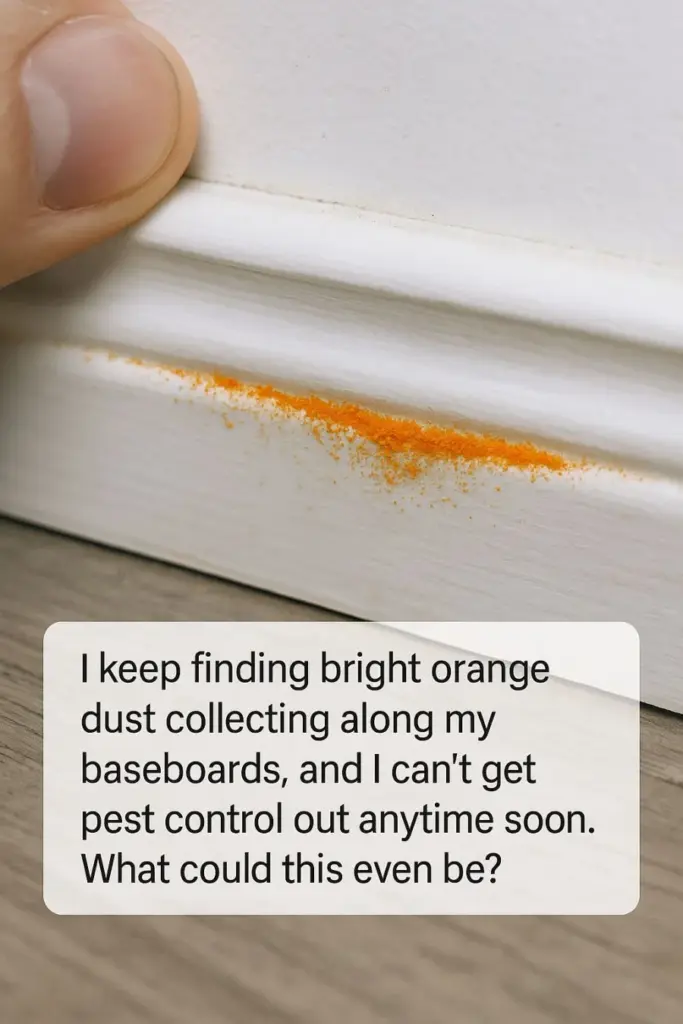
Finding bright orange dust along your baseboards can be worrying. While sometimes harmless, it may indicate pests, material wear, or moisture problems. Here’s a breakdown of the most common causes and what you can do before professional help arrives.
1. Sawdust From Hidden Wood Damage
-
Cause: Wood deterioration or pests like termites/carpenter ants produce frass (wood particles + insect droppings).
-
Signs: Small holes, soft or spongy wood.
-
Action: Inspect and repair damaged wood to prevent structural issues.
2. Termite Frass vs. Ordinary Dust
-
Cause: Termite frass is uniform, pellet-like (~1 mm) and often in small piles.
-
Action: Differentiate from regular dust; call pest control if suspected.
3. Carpenter Ants & Other Insects
-
Cause: Carpenter ants hollow wood, leaving behind sawdust-like debris.
-
Signs: Rustling in walls, visible ants, small holes in wood.
-
Action: Seal entry points, reduce moisture, and monitor until experts arrive.
4. Rusting Fasteners
-
Cause: Screws, nails, or brackets oxidize in humid environments, creating orange powder.
-
Action: Inspect metal components, replace or treat rusted hardware.
5. Wood Friction Dust
-
Cause: Doors, floors, or furniture rubbing together produces dust over time.
-
Action: Apply wax/lubricant, adjust surfaces, and maintain furniture.
6. Paint, Stain, or Drywall Pigments Breaking Down
See more on the next page to continue reading →
ADVERTISEMENT
ADVERTISEMENT