-
Cause: Environmental factors (humidity, UV, temperature) degrade paints or drywall.
-
Signs: Peeling, cracking, fading.
-
Action: Repaint or seal affected areas.
7. Brick, Tile, or Concrete Particles
-
Cause: Erosion, wear, or damage from construction materials.
-
Signs: Crumbling grout, chipped tiles, eroding bricks.
-
Action: Repair or seal damaged sections.
8. Outdoor Soil, Pollen, or Road Dust
-
Cause: Tracked-in debris from outside.
-
Action: Seal doors/windows, use doormats, and consider air purifiers.
9. Mold, Mildew, or Fungal Growth
-
Cause: Rust-colored spores from fungi thrive in damp, poorly ventilated areas.
-
Action: Inspect moisture-prone areas, fix leaks, ventilate, use dehumidifiers. Professional mold remediation may be needed.
10. Degrading Household Items
-
Cause: Pet toys, fabrics, or decorations can crumble into dust.
-
Action: Replace damaged items and opt for higher-quality materials.
11. Cleaning Hacks That Backfire
-
Cause: Some DIY cleaning methods leave residues that attract more dust.
-
Action: Use gentle, non-abrasive cleaners; research before trying new hacks.
12. Simple DIY Tests Before Pest Control
-
White Paper Test: Place paper under baseboards to catch falling dust.
-
Tap & Scrape: Lightly tap or scrape suspect areas to observe dust texture and color.
ADVERTISEMENT
These steps help identify the source and guide temporary management while waiting for professionals.
✅ Key Takeaways
-
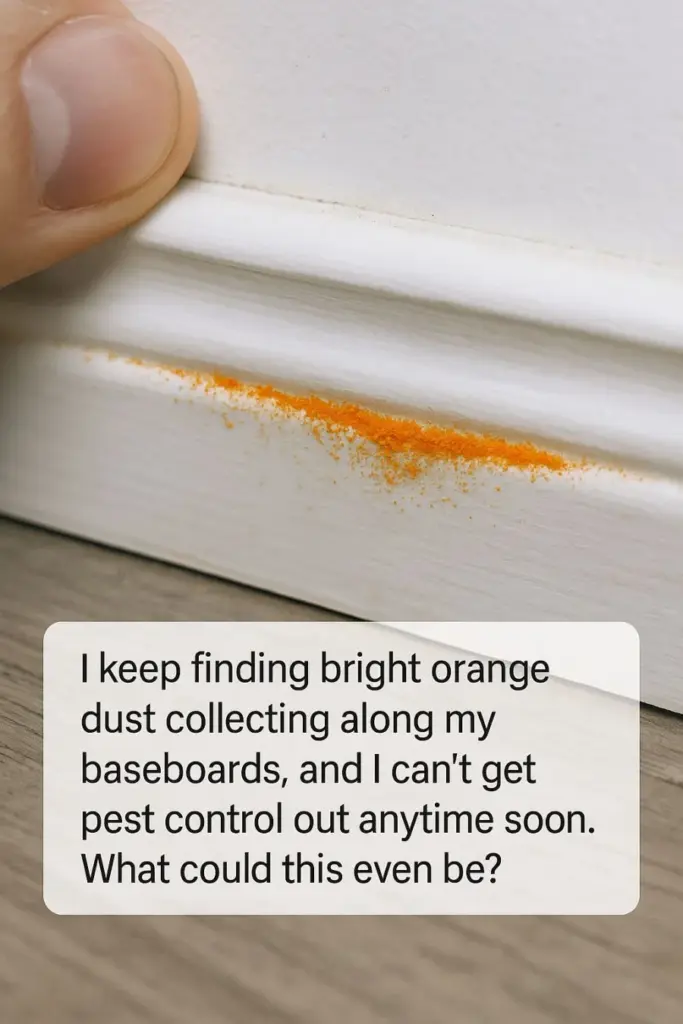
Orange dust can be harmless or a sign of pests, rust, friction, material breakdown, or moisture issues.
-
Inspect, maintain, and clean affected areas carefully.
-
Conduct simple DIY tests to narrow down the cause.
-
Professional assessment is safest if you suspect termites, mold, or extensive structural damage.
ADVERTISEMENT