ADVERTISEMENT
Ingredients:
-
½ cup baking soda
-
2–3 tbsp liquid coconut oil (melted if solid)
Optional:
-
5 drops lemon essential oil (fresh scent and extra degreasing)
-
1 tbsp white vinegar (add to coconut oil first for extra cleaning power)
✅ All-natural, non-toxic, safe for kids and pets
✅ Works on wood, laminate, painted, and thermofoil cabinets
ADVERTISEMENT
🧽 Step-by-Step: Deep-Clean Your Cabinets
1. Remove Cabinet Contents & Hardware
-
Empty shelves (perfect time to declutter!)
-
Remove doors if possible for a thorough clean (optional)
-
Take off handles and knobs; clean separately with soapy water
Tip: Label doors with tape to remember placement
2. Make the Cleaning Paste
-
Mix baking soda and coconut oil until it forms a toothpaste-like consistency
-
Add lemon oil or vinegar if desired
🍋 Coconut oil softens and conditions; baking soda gently scrubs
3. Apply the Paste
-
Use a soft sponge or microfiber cloth
-
Work in small sections (one door or drawer front at a time)
-
Scrub gently in circular motions, focusing on greasy areas and handles
✅ Let the paste do the work—no hard scrubbing
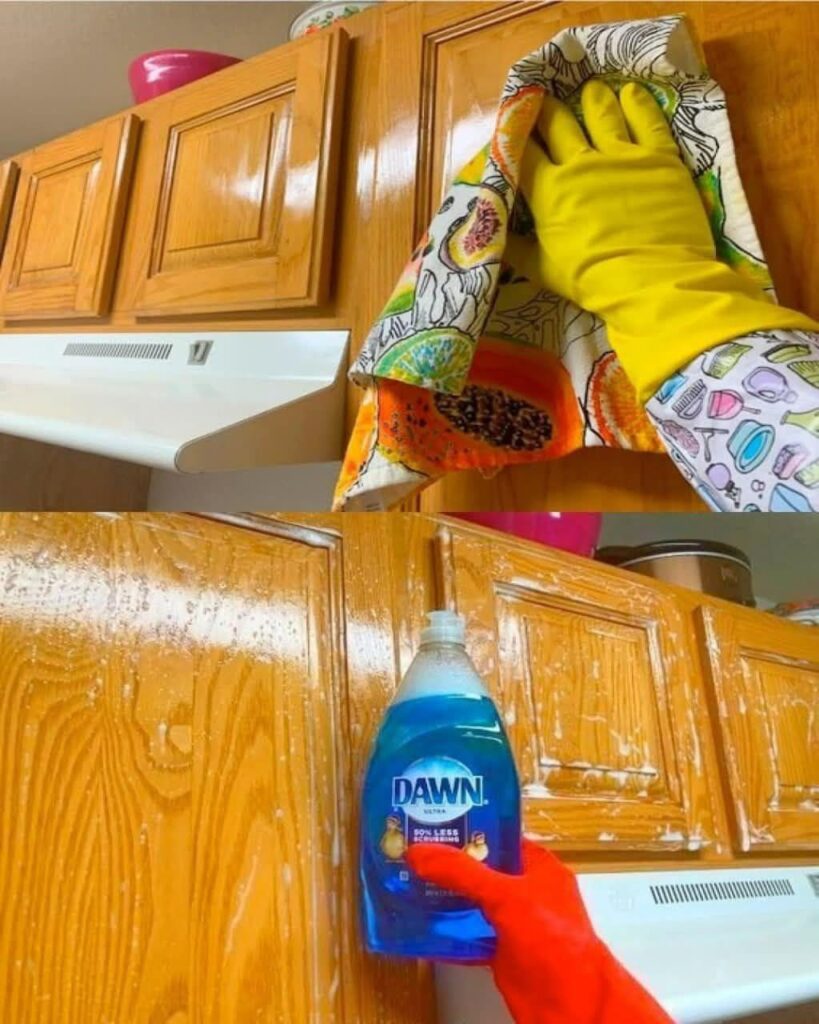
4. Wipe Clean
-
After 1–2 minutes, wipe off with a damp microfiber cloth
-
Rinse the cloth often to avoid spreading grime
-
For stubborn spots, reapply paste and let sit 5 minutes before wiping
💡 For textured surfaces: use an old toothbrush to reach crevices
5. Polish & Shine
-
Once cabinets are clean and dry, buff with a dry microfiber cloth
-
For extra shine and protection, apply a thin layer of pure coconut oil and buff in
✨ This conditions wood and repels future grime
6. Reattach & Refresh
-
Reinstall hardware and doors
-
Optional: line shelves with peel-and-stick liner for easier future cleaning
-
Step back and admire your sparkling kitchen!
✅ Pro Tips for Best Results
-
Clean top to bottom to avoid drips on clean areas
-
Ventilate the kitchen (open windows or turn on the fan)
-
Use soft cloths—avoid steel wool or abrasive pads
-
Repeat every 3–6 months, or more often if you cook daily
-
Wipe spills quickly to prevent buildup from the start
🚫 What Not to Do
-
Don’t use bleach or ammonia—they can damage finishes
-
Don’t soak wood cabinets—water can warp or bubble surfaces
-
Don’t skip drying—moisture can lead to mold or mildew
-
Don’t use too much oil—it can leave a greasy residue
🌿 Bonus: Alternative Natural Cleaners
If you don’t have coconut oil:
-
Olive oil + lemon juice – Great wood polish
-
Vinegar + water (1:1) – Works on non-wood surfaces
-
Castile soap + water – Gentle, effective degreaser
⚠️ Always test on a small hidden area first.
🌟 Final Thoughts
Deep-cleaning greasy kitchen cabinets doesn’t have to be a dreaded chore.
With baking soda and coconut oil—two items you probably already have—you can transform sticky, dull cabinets into smooth, shiny surfaces that feel like new.
No harsh fumes. No toxic residues. Just natural cleaning power that works.
Next time your kitchen feels “off,” skip the chemical sprays.
Grab your sponge, mix up this magic paste, and give your cabinets the deep clean they deserve.
Because a sparkling kitchen isn’t just clean—
it’s inviting, fresh, and full of joy.
ADVERTISEMENT