ADVERTISEMENT
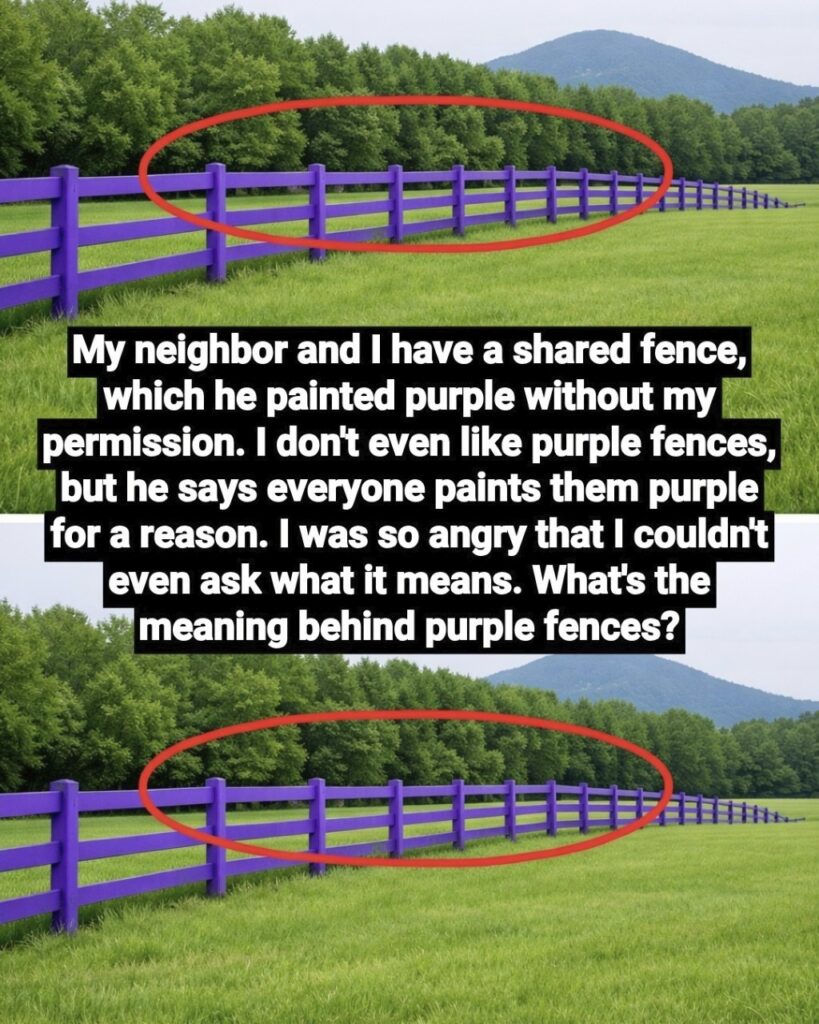
You’re walking through a quiet forest or countryside trail, enjoying nature, when something unusual catches your eye—a fence post or tree trunk painted a bold shade of purple. It doesn’t look decorative or random. It feels intentional. And it is.
That purple mark is not art. In many parts of the United States, it is a legal warning that you are entering private property.
This is known as the “Purple Paint Law”, a real legal system used in many rural states where painted purple markings serve the same purpose as “No Trespassing” signs.
ADVERTISEMENT
⚖️ What Is the Purple Paint Law?
The purple paint system was created as a practical solution for landowners who needed a long-lasting way to mark their property boundaries. Traditional signs can fade, break, or disappear over time, especially in rural environments. Purple paint, however, is weather-resistant, highly visible, and can last for years.
Instead of relying only on signs, landowners can legally mark trees, fence posts, or gates with purple paint to indicate private property.
📜 The idea first gained legal recognition in the United States in the late 1990s, starting with states like Texas, and later spreading to many others.
🗺️ Where Is It Used?
Today, many U.S. states recognize purple paint as a valid trespassing warning, including places like Texas, Florida, North Carolina, Missouri, Arkansas, and others.
However, the rules are not identical everywhere. In some states, purple paint alone is enough. In others, it must be used alongside posted signs. That’s why local laws always matter.
🎨 How the Mark Must Look (Legally)
Not every purple mark counts. For it to be legally valid, it must follow specific rules:
-
Must be a clearly visible purple color
-
Painted on trees, posts, or fences (not random objects)
-
Usually placed 3–5 feet above the ground
-
Typically a vertical stripe, not a random splash
-
Spaced consistently along property boundaries
These details ensure the marking is intentional and legally enforceable.
🚶♂️ What Should You Do If You See It?
See more on the next page to continue reading →
ADVERTISEMENT